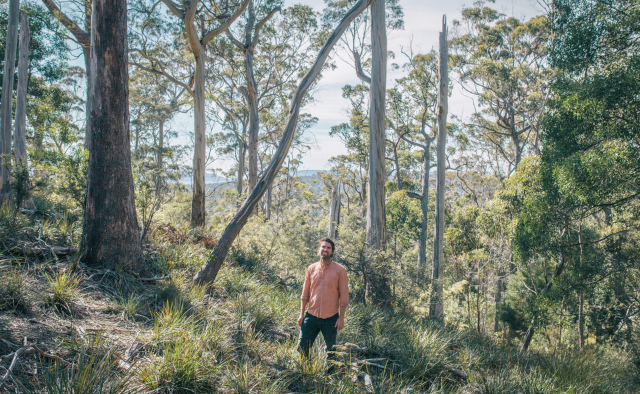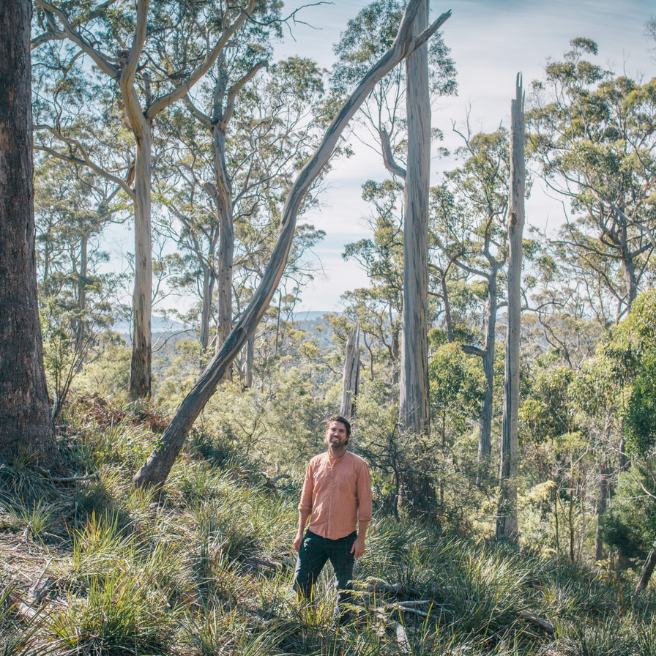
Buying a 350-acre bush block on Tasmania's Tasman Peninsula under a conservation covenant might not sound like a typical move for a young family, but for 38-year-old Kristan Laemmle-Ruff and his wife Summer, it was an opportunity to build a lasting conservation legacy while raising their children surrounded by nature.
“We were in our early 30s, planning to start a family and thinking about where and how we wanted to raise our kids and we knew that wasn’t in a warehouse apartment in Melbourne,” said Kristan.
“The idea of a conservation covenant wasn’t new to me. My dad purchased a conservation property through Tasmanian Land Conservancy 20 years ago, so when the property at Mount Communication came up for sale, we saw it as an exciting long-term project.”
Five years later, Kristan and his family are living off grid on the mountain surrounded by protected bushland that supports Tasmanian devils, quolls, masked owls, swift parrots and multiple active wedgetail eagle nests, and they are committed to managing and protecting the property.
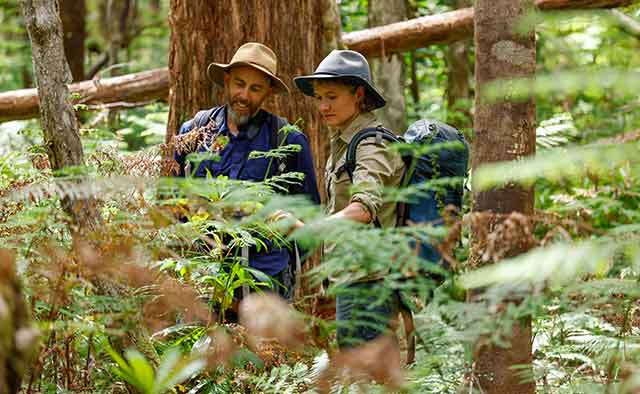
“There is a lot to learn and we are keen to connect with other local landholders, community groups, First Nations groups and fire practitioners,” he said.
“We’ve got a big job ahead of us to remove the Spanish heath infesting parts of the property, but we are focused on enhancing the health of the land.
“Buying a property under a conservation covenant means that we are the custodians of the land for future generations. It’s a feeling of both great opportunity and responsibility to know that we are making an impact right now while also building an environmental legacy for the future.”
Kristan was one of 100 private landholders and representatives from land management organisations attending the Landholder Forum at the annual Australian Land Conservation Alliance (ALCA) Conference in Hobart in October, discussing the opportunities and challenges of private land conservation in Australia.
Dr Katherine Tuft, CEO of Tasmanian Land Conservancy, said it was encouraging to see a new generation of covenanters starting to emerge.
“Tasmania currently has 970 covenants protecting more than 115,000 hectares of private reserves. Many of these are owned and managed by rural landowners, retirees and semi-retirees with a strong conservation ethic,” Ms Tuft said.
“Kristan and Summer's story shows that private land conservation is not just for older generations. We are starting to see younger families protecting nature through formal arrangements, and building conservation into their long-term future, and we want to see more people encouraged and supported to take that step.
“If we want conservation on private land to continue growing, we need to make it easier for the next generation of landholders to participate through practical support, stewardship programs, community connections and policies that recognise the public benefits conservation landholders provide.”
ALCA CEO Dr Jody Gunn said that private land conservation is one of Australia's greatest opportunities to reverse nature decline and help achieve national and global biodiversity commitments.
“Tasmania has a large public protected area, but it’s not just about the number of hectares, it’s about protecting the full range of plants, animals and ecosystems that most need it, and making sure their habitat is connected enough for nature to thrive.
“Almost half of Australia’s threatened species, and a lot of ecosystems that are underrepresented in national parks, are on private land. Private land conservation offers a major opportunity to fill gaps, with strong community appetite and many willing landholders ready to contribute. Realising that potential at scale will require long-term, sustainable investment in Tasmania's conservation covenant program,” Dr Gunn said.