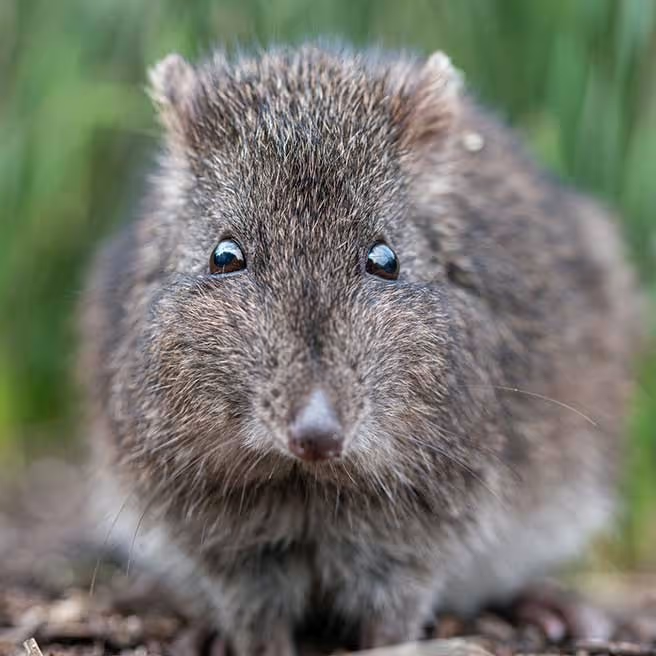
The plan leaves out a lot of important information about the threats the species faces, the habitats it needs to survive, and the actions required to protect those habitats.
Background
ALCA has responded to the Draft National Recovery Plan for the Northern Long‑nosed Potoroo, raising concerns that the plan does not meet basic requirements under the EPBC Act. The draft omits a clear description of habitat critical to survival, does not identify which populations are under the greatest pressure, and leaves out major threats that are documented in the species’ Conservation Advice.
This matters because recovery plans are intended to be the core legal tool guiding protection of threatened species. Potoroos are among Australia’s most vulnerable mammals, with more than 60 percent of species in the potoroid family extinct or threatened. The draft plan itself acknowledges that land clearing has “profound and adverse effects” on the northern long‑nosed potoroo, yet it does not outline the protections needed to prevent further loss of habitat.
A 2015 analysis found that only 10 percent of Australia’s most endangered animals had recovery plans that placed prescriptive limits on habitat loss, despite two‑thirds listing habitat loss as a major threat. ALCA notes that the current draft risks repeating this pattern by omitting critical information and by using terminology that avoids triggering available regulatory tools.
For a plan to drive real recovery, it must clearly state what habitat must be protected, identify where pressure is greatest and reflect the best available evidence on threats, including those related to forestry, roads and predator interactions.
Recommendations
- Correctly identify habitat critical to survival and require its protection. ALCA recommends renaming the relevant section to “Habitat critical to survival” and explicitly stating that this habitat must not be destroyed, aligning with EPBC Act requirements.
- Identify populations under particular pressure and specify protection actions. The draft plan acknowledges important populations but does not indicate which are most at risk or the steps needed to safeguard them.
- Provide an accurate and evidence‑based assessment of threats. The draft suggests wild dog predation may pose a risk, but our submission notes studies showing dingoes may not be a threat and may even offer protective benefits by suppressing mesopredators. The plan also omits threats from timber harvesting, despite the Conservation Advice identifying logging as a very high‑risk activity.
- Include required conservation actions already identified in official advice. Recommended actions include protecting populations in areas subject to harvesting, assessing forestry practices, maintaining stringent protection in logging zones, and reducing road mortality through measures such as underpasses.