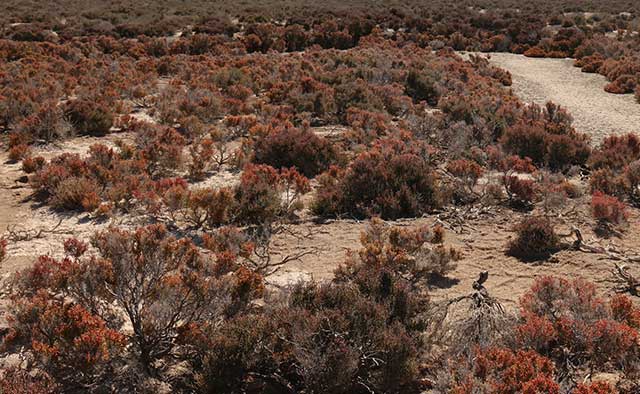
The Australian Bushland Program has the potential to protect Australia’s most important landscapes, but only if its design supports rapid, large‑scale conservation.
Australia’s natural systems are under growing pressure
Our natural environment is deteriorating, and current policy and investment settings are not keeping pace with the scale of decline. The 2021 State of the Environment Report found that environmental conditions are poor and continuing to worsen due to climate change, habitat loss, invasive species and pollution, with impacts already evident for communities and the economy.
Although nature underpins key industries, the Federal Government invests very little in environmental protection. In the 2025 Budget, biodiversity spending was about 530 million dollars, which is less than 0.1 percent of federal expenditure. At the same time, 26.3 billion dollars in nature negative subsidies support activities that degrade ecosystems.
Nature underpins national prosperity
Australia’s economy relies heavily on healthy natural systems. Around half of national GDP, valued at more than one trillion dollars, depends on ecosystem services such as water supply, soil function, pollination, fisheries, forestry, carbon storage and climate regulation.
Nature performs like long term economic infrastructure. While built assets depreciate, well managed ecosystems often increase in value and continue providing essential services. Despite this, federal environment funding has grown by only 2 percent over a decade in which the wider economy grew at an average annual rate of about 2.4 percent.
Nature loss is increasing Australia’s insurance risks, with insurers warning that declining ecosystems amplify exposure across supply chains and contribute to rising natural disaster losses, reinforcing that intact, well managed nature plays an important role in reducing these risks.
Building policy settings that support nature and productivity
ALCA proposes several ways the Australian Government could shift existing policy and investment settings to better support national environmental and economic goals.
Policy reforms
• Redirect a portion of the 26.3 billion dollars in nature negative subsidies toward nature positive activities, which could be budget neutral.
• Amend the Carbon Credits Act to allow government procurement to consider environmental co benefits when purchasing credits.
• Expand investment in nature based solutions that help manage climate and disaster risks, noting that green infrastructure often appreciates over time.
• Require government investment funds to allocate a proportion of their portfolios to nature positive investments.
Business investment settings
• Review tax settings for conservation and restoration to remove barriers to private investment, as recommended in previous national reviews.
• Support clearer and eventually mandatory nature related disclosures for businesses to guide risk management and investor confidence.
Direct Government program investments to deliver on existing commitments
• Increase baseline funding for environment and climate programs, noting that current expenditure is less than 0.1 percent of the Federal Budget.
• Expand departmental capacity at DCCEEW to implement major reforms, threatened species recovery and large scale restoration.
• Substantially increase investment in 30 by 30 delivery beyond the current 250 million dollar allocation.
• Scale up funding for the Threatened Species Action Plan to support the commitment to “no new extinctions.”
• Invest in environmental workforce planning to meet growing demand for restoration and land management skills.
• Establish a national restoration strategy with at least 200 million dollars per year in new funding to begin delivering large scale ecological restoration.
Takeaway
If investment settings remain unchanged, Australia risks falling short of its national and international commitments, including protecting 30 percent of land by 2030, reversing biodiversity decline and meeting Net Zero goals. These gaps carry direct economic risks because so many sectors depend on natural capital. Smarter budget settings that value and restore nature would help secure environmental recovery and support a stronger, more resilient economy.
Image: Craig Manners/Unsplash