The Australian Government is developing a new National Environmental Standard for Environmental Offsets, which will guide how environmental harm from approved developments is compensated. They are, currently, far from the “clear standards” promised.
Background
Offsets are used only after all reasonable steps to avoid and minimise environmental harm have been taken, so the strength and clarity of offset rules directly affect the protection of Australia’s threatened species and ecosystems.
The current draft allows wide discretion, includes unclear or weak language, and risks enabling offset decisions that are not backed by strong science or enforceable expectations. For example, the draft uses terms such as “will likely contribute” and includes mechanisms that can proceed “on limited evidence.” These weaken confidence that offsets will deliver real and measurable gains for nature.
The integrity of the offsets system is crucial at a time when biodiversity loss is accelerating, and when communities expect transparency and accountability in environmental decisions.
Recommendations
1. Require offsets to commence prior to impact
Offsets must—not “should”—start before environmental damage occurs. This is essential to ensuring that impacts are genuinely compensated and that the public can trust the system.
2. Allow offset activities to include land acquisition for conservation
Land acquisition is one of the most secure and effective ways to deliver long‑term biodiversity protection and should be explicitly recognised.
3. Remove the idea that direct offsets can be “self‑sustaining”
Given climate change, invasive species and landscape degradation, no on‑ground conservation activity is genuinely self‑sustaining. All require ongoing management.
4. More tightly restrict indirect offsets
Research or education projects should not displace on‑ground conservation unless clearly justified. ALCA recommends mandatory approval from the Threatened Species Scientific Committee.
5. Tighten additionality rules
Only legally required conservation actions should be excluded from additionality. Voluntary conservation efforts should not be penalised or displaced.
6. Explicitly require adherence to the mitigation hierarchy
Offsets should only be used after avoidance and minimisation have been properly applied. This must be stated clearly within the Standard itself.
7. Strengthen offset integrity requirements
Terms like “likely to contribute” and “analogous” should be replaced with stronger, more precise language. The Standard should set clear, enforceable expectations for evidence, certainty, and measurable outcomes.
Together, these changes would provide a stronger, clearer, more scientifically grounded framework that the Government has committed to delivering. If the Standard is adopted in its current form, offsets could be approved with limited evidence, vague expectations and inconsistent requirements - risking weaker environmental outcomes and undermining trust in the broader EPBC reforms.
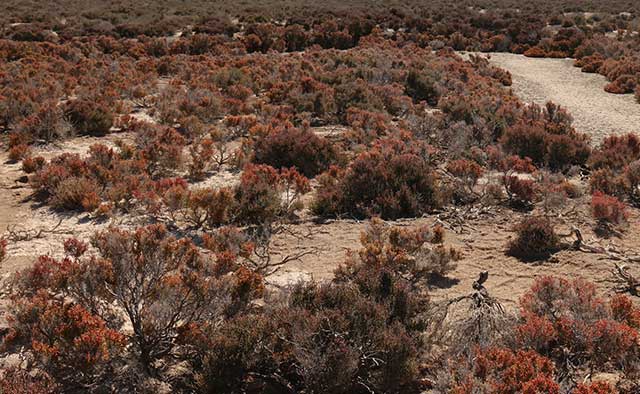
Image: Rod Long/Unsplash