The Australian Government is designing a new Protect and Conserve method for the Nature Repair Market. This method will guide how landholders can generate biodiversity certificates by protecting and managing nature on private land.
Why it's important
The Nature Repair Market is intended to unlock private investment in conservation and help Australia meet national biodiversity goals, including expanding the protected and conserved area network. For the market to work, projects under the Protect and Conserve method must be credible, transparent, and aligned with national standards.
The submission highlights that integrity is central: projects must be able to achieve protected area or conserved area status consistent with the Strategy for Australia’s National Reserve System and the National OECMs Framework. Without this, the market risks funding activities that fall short of durable conservation outcomes.
At the same time, overly complex rules could drive up costs and deter landholders - especially those with limited resources - from participating. Ensuring the method is simple, harmonised with existing covenanting programs, and accessible to land managers nationwide is essential for broad uptake.
Our recommendations
ALCA has been providing detailed technical input to Government during the design process. In our submission, we offer five high‑level principles that would strengthen the method to deliver real environmental integrity, be practical for landholders, and support meaningful long‑term nature protection.
1. Ensure integrity by requiring protected or conserved area status
Projects should only qualify under the method if they can meet established national standards for protected or conserved areas, including ongoing effective management. This ensures funded activities deliver genuine, long‑term conservation benefits.
2. Reduce unnecessary complexity
The method should be no more complex than necessary to maintain integrity. Complexity increases transaction costs and makes participation harder. Harmonising the method with existing state‑based conservation covenant programs will reduce duplication and help maintain clear, consistent standards.
3. Create a clear pathway for protected areas
Currently, the draft method provides a default pathway for conserved areas but not protected areas. Establishing a clear, streamlined pathway for protected areas, and especially those delivered with state-based authorities, would help avoid disincentives or delays.
4. Signal the premium value of protected areas
Protected areas provide higher biodiversity value, and the method should clearly reflect this. The existing Commitment to Protection metric contributes to this signalling, but further reinforcement is possible through government procurement decisions and the Nature Repair Market investment strategy.
5. Allow multiple certificates over time
Because projects last 100 years, issuing only a single upfront biodiversity certificate shifts excessive risk onto landholders and could make participation less attractive. We recommend issuing a ‘protection certificate’ at the outset and a new ‘management certificate’ every five years. This better reflects ongoing management needs and supports commercial viability.
In summary, a method that is simple, credible, and aligned with national standards would attract a wider range of landholders - including those with lower financial capacity - while ensuring biodiversity certificates represent real, durable conservation gains. Clear rules, harmonised processes, and multiple certificates over time would make the market more practical, fair, and financially workable. This, in turn, would help Australia expand its protected and conserved areas and deliver lasting benefits for nature.
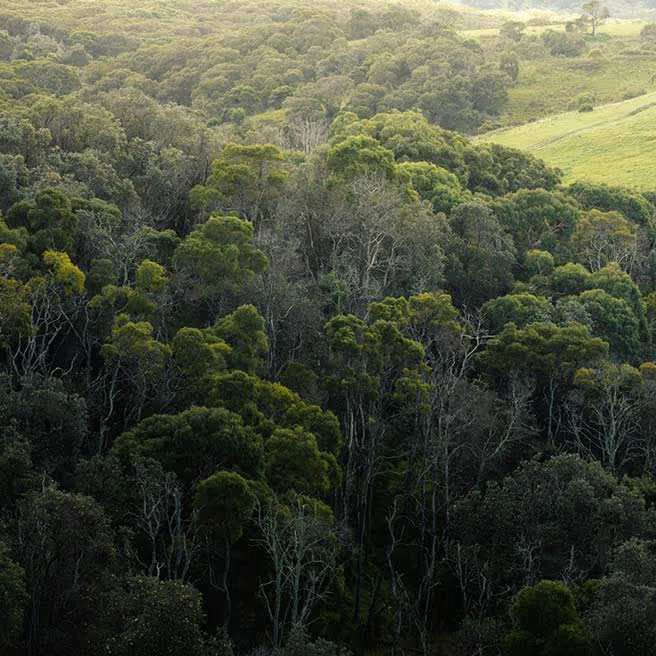
Image: Mitchell Luo/Unsplash