Buffel grass poses a major and growing risk across the Northern Territory. Stronger, coordinated, and early action will save money, protect communities, and safeguard the Territory’s irreplaceable landscapes for the long term.
A fast spreading threat
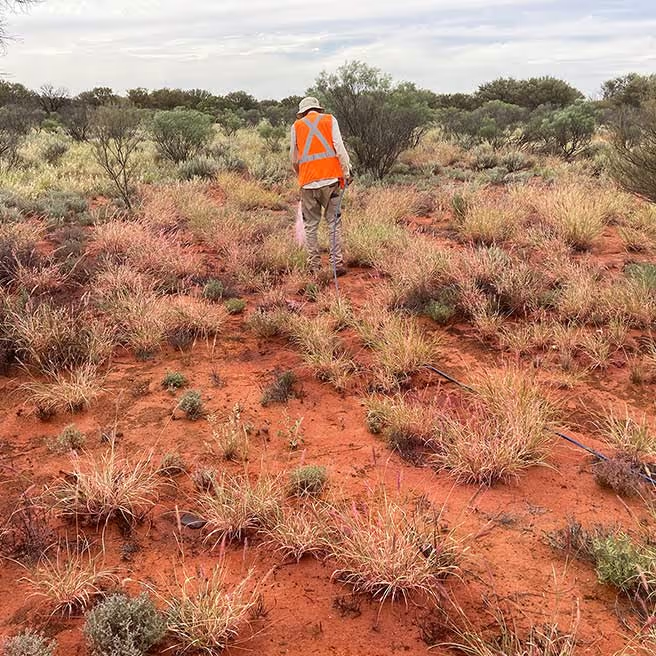
Buffel grass is an invasive plant that is rapidly spreading across the Northern Territory. Originally introduced as a pasture species, it has become one of the most damaging environmental threats in arid and semi‑arid regions. Once established, buffel grass grows densely, outcompetes native vegetation, and fuels extremely hot fires that are difficult to control.
These fires put people, property, and wildlife at risk and can transform entire ecosystems. Conservation organisations operating in the NT are already facing major challenges controlling outbreaks, with significant cost, time, and safety implications for staff working on the ground.
The NT Government has released a draft Buffel Grass Weed Management Plan 2026–2036, and the Australian Land Conservation Alliance (ALCA) has provided detailed recommendations to strengthen it.
Why the Northern Territory must act now
Buffel grass is spreading quickly into new parts of the Territory, including areas where it may still be possible to eradicate it if action happens immediately. Once the grass becomes widespread, control becomes extremely expensive and difficult, and the ecological consequences escalate.
In South Australia, buffel grass has already been declared a weed and identified as “one of the greatest pest threats” to the state’s rangelands because of its ability to alter fire regimes and reshape entire ecosystems. The NT is now facing similar risks.
ALCA’s member organisations, which manage a significant portion of the NT’s conservation estate, report increasing impacts on biodiversity, cultural sites, and fire management. Without stronger action, more landscapes - including national parks, private conservation reserves, transport corridors, and Aboriginal land - will face escalating long-term threats.
Recommended actions
ALCA is calling for practical, achievable steps that would greatly strengthen the NT’s response:
Stronger weed declarations
- Declare buffel grass a Class A weed (eradication required) in the Katherine and Darwin regions, where it is still limited.
- Declare it at least Class B (growth and spread controlled) across the rest of the Territory.
Support a national approach
- Back the nomination of buffel grass as a Weed of National Significance. This would not impose new obligations on landholders, but it would unlock Federal funding, improve coordination across states and territories, and support new research and technology for control.
Clearer management requirements
- Categorise buffel grass as a priority eradication species in regions where removal is still feasible.
- Remove statements suggesting buffel grass has “value to the pastoral industry,” as evidence does not show a consistent net benefit.
- Extend management requirements to all conservation areas and all transport corridors, not only those in Central Australia.
- Allow conservation land managers to meet requirements through existing or updated management plans.
Better support for land managers
- Expand the Buffel Grass Education and Assistance Program to cover all conservation managers, transport corridor operators, and interested landholders.
- Work with conservation organisations to review and improve buffel grass information materials.
Without stronger action, buffel grass will keep spreading, driving more intense fires and causing irreversible damage to ecosystems, communities, and cultural sites. With stronger measures, the Territory can protect priority areas, improve coordination and funding, and better safeguard people, wildlife, and landscapes.