Current approaches, which rely heavily on voluntary action, are not working, and without stronger, coordinated measures, cats will continue to drive biodiversity decline.
Background
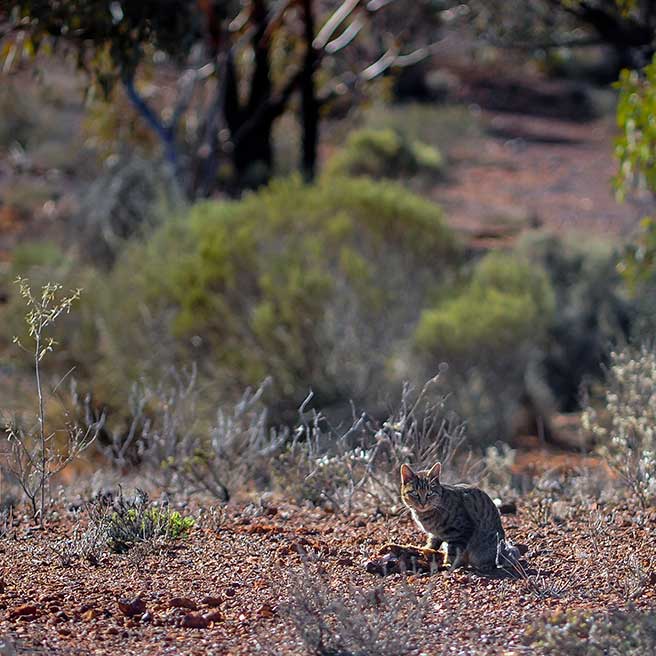
Cats, including pets and ferals, are a major driver of biodiversity loss across Australia. They are linked to the decline of more than 230 threatened native species and have contributed to many mammal extinctions since European settlement.
The Tasmanian Government is currently consulting on ways to improve cat management. The previous Tasmanian Cat Management Plan (2017–2022) relied largely on voluntary behaviour change and advisory approaches, which have not delivered results at the scale needed.
Why better cat management matters
Cats are a popular pet in Australia, and their numbers have increased significantly since COVID, a trend also reflected in Tasmania. This makes effective management more urgent for protecting native species and ecosystems.
Tasmania is home to high value ecosystems and unique wildlife that are particularly vulnerable to cat predation.
Roaming pet cats kill hundreds of native animals per year, and about 78% of roaming cats hunt wildlife. This occurs during both day and night, meaning partial measures like curfews do not fully address the problem.
Recommendations
ALCA is pleased to see the Tasmanian government’s focus on improving cat management. However, it must take the learnings from implementation of the Tasmanian Cat Management Plan 2017-2022 to improve the approach going forward. ALCA recommends the following:
- Move from advisory policy and hoping people voluntarily change their behaviour to having clearer, stronger rules that can actually be enforced, including gradually introducing mandatory laws to keep cats contained.
- Provide an increased level of funding and commit to it for the long term.
- Set clear targets across the whole state and track progress so we know if things are improving over time.
- Focus cat management efforts on areas that are especially important for conservation.
- Make sure cat management is coordinated with other relevant strategies and plans (like invasive species and threatened species programs) and uses adaptable, evidence-based pest control methods to improve results and efficiency.