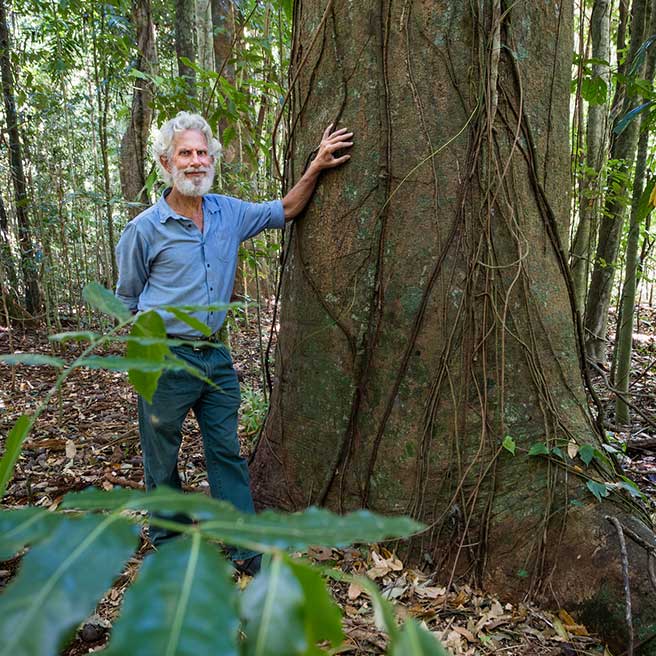
North Queensland landholder Peter Rowles has spent decades restoring habitat and protecting native plants and animals on his 250-hectare property near Innisfail.
His property is protected by a nature refuge, which is a voluntary conservation agreement that ensures the land remains protected even if ownership changes in the future.
There are 592 nature refuges across Queensland, protecting almost 5 million hectares of habitat and making a big contribution to the state's conservation estate.
But despite these contributions, landholders like Peter are having to pay land tax on the protected area of their properties.
Queensland is the only state in Australia still taxing people for protecting nature - a policy that landholders and environmental organisations say punishes people trying to safeguard nature.
Policy Lead at the Australian Land Conservation Alliance, Michael Cornish, said the tax sends the wrong signal to the very landholders Queensland depends on to help protect biodiversity.
"Queensland protects just 9.4 per cent of its land for conservation, the lowest proportion of any state or territory in Australia. At the same time, it relies more heavily on private landholders than anywhere else to help safeguard nature.
"These landholders should be applauded and encouraged, not penalised," Mr Cornish said.
The Queensland Government has committed to grow the state's protected area estate to 17%. With nearly 85% of Queensland privately owned or managed, private land conservation will remain essential to achieving that goal.
Mr Rowles said private landholders like himself play a big part in helping Queensland meet its conservation goals.
“I’ve seen fabulous improvements in wildlife on my own property. Cassowary numbers are increasing, and Coxen’s Fig-Parrots, Imperial Pigeons and Bee-eaters are also common here, as well as musky rat-kangaroos, striped possums, and pademelons – they all benefit.”
“Weeds are always an issue and take a bit to keep under control. Conservation work takes time and money, and at personal expense.
“It's hard enough with the usual rates and taxes in this economic climate, but when the Queensland Government slug you with land tax for helping them meet their own commitments, it's really discouraging."
Other states have already recognised the value of private land conservation by exempting nature refuge equivalents from land tax.
The Victorian Government was the most recent state government to do so, and landholder interest in conservation covenants doubled.
Mr Cornish said removing land tax is a very cheap way to deliver big environmental returns.
“Whilst the Queensland Government does not release its data on nature refuge land tax revenue, if the experience in Victoria is anything to go by, then it is minimal. Land tax on conservation properties there was estimated at around $700,000 annually – a tiny figure in a state budget. It’s hard to justify a policy that raises so little, yet disincentivises private conservation across the state.”
The Australian Land Conservation Alliance is calling on the Queensland Government to exempt land under nature refuges from land tax in the 2026–27 state budget.
.png)